Coins in the Fountain — explained!
Now, it is common to see coins beneath the water’s surface in fountains everywhere. Airports, museums, parks — take a look, you’ll see them. When I was a little girl, my mother would point to the submerged change and say, "Look at the coins. That's because of Daddy." I didn't fully understand what she meant, but I still felt proud. It wasn't until I was much older that I grasped what my father had actually set in motion: that a novel he wrote in 1952 had taken a quiet Roman ritual and turned it into a most beloved tradition.
Water, Gods, & Ancient Offerings
The impulse to toss something into water is ancient and nearly universal. Long before coins existed, fresh water sources were regarded with deep reverence — springs and wells were lifelines for communities, and in Celtic Europe, they were believed to be inhabited by deities. Offerings, often jewelry or weapons, were placed in these waters to gain the favor of supernatural beings. The wishing well evolved from this.
As for the Trevi Fountain specifically, the introduction of the coin toss is attributed to the German archaeologist Wolfgang Helbig, who lived in Rome between the late 19th and early 20th centuries. Helbig drew inspiration from these ancient customs and embraced coin tossing as a symbolic farewell gesture — a way to express the hope of returning to the city he loved. The tradition at the Trevi, then, was real but modest — a private ritual among educated visitors and the Roman intelligentsia. It was not yet a global phenomenon.
The Fountain at Three Roads
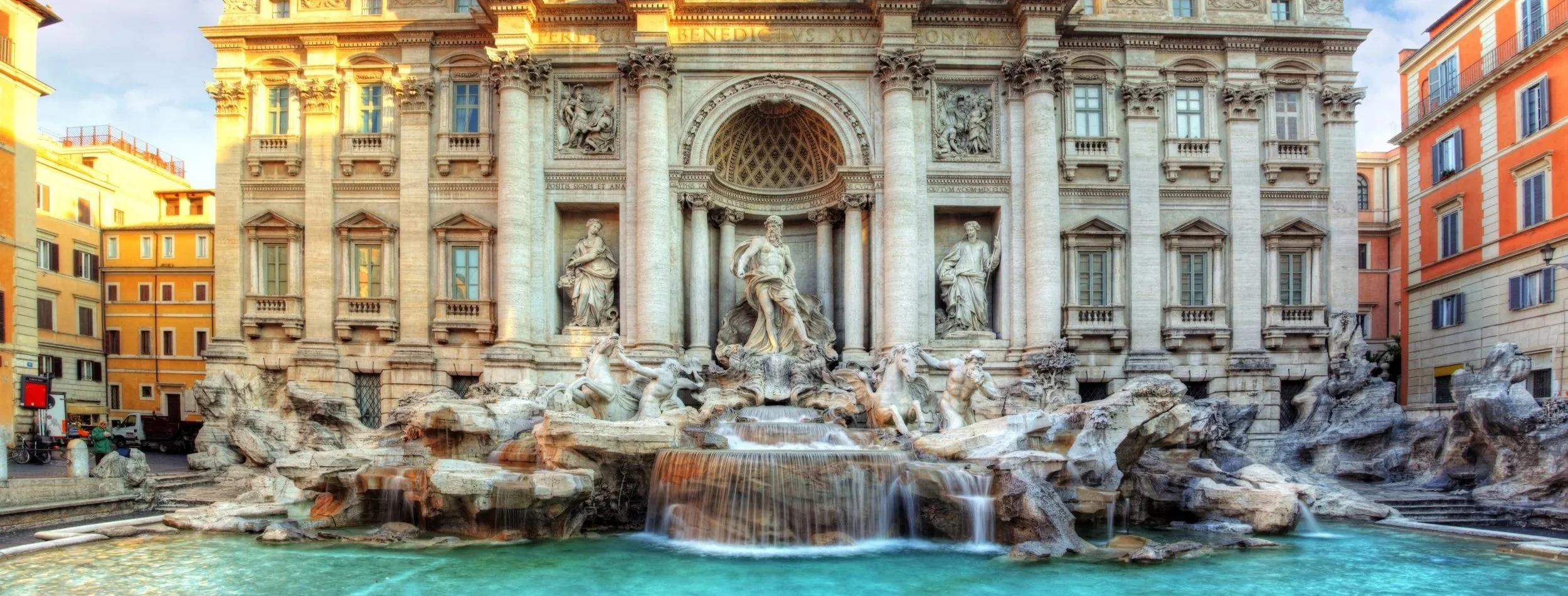
The Trevi itself is centuries older than the coin toss. Its name derives from the word trivio, meaning "three roads," because it sits where three streets meet — the modern Via Poli, Via dei Crociferi, and Via delle Muratte. But its roots go deeper still: the Aqua Virgo aqueduct, built in 19 B.C. by Marcus Agrippa, still feeds the fountain today. The legend of the coins is: one coin means you will return to Rome; two means you will fall in love with an Italian; and three means you will marry them. The proper ritual requires that you stand with your back to the fountain, extend your right arm, and toss the coin over your left shoulder, aiming for the central basin — and if you're going for all three wishes, each coin must be thrown separately. No shortcuts.
Before the Movie, Before the Song
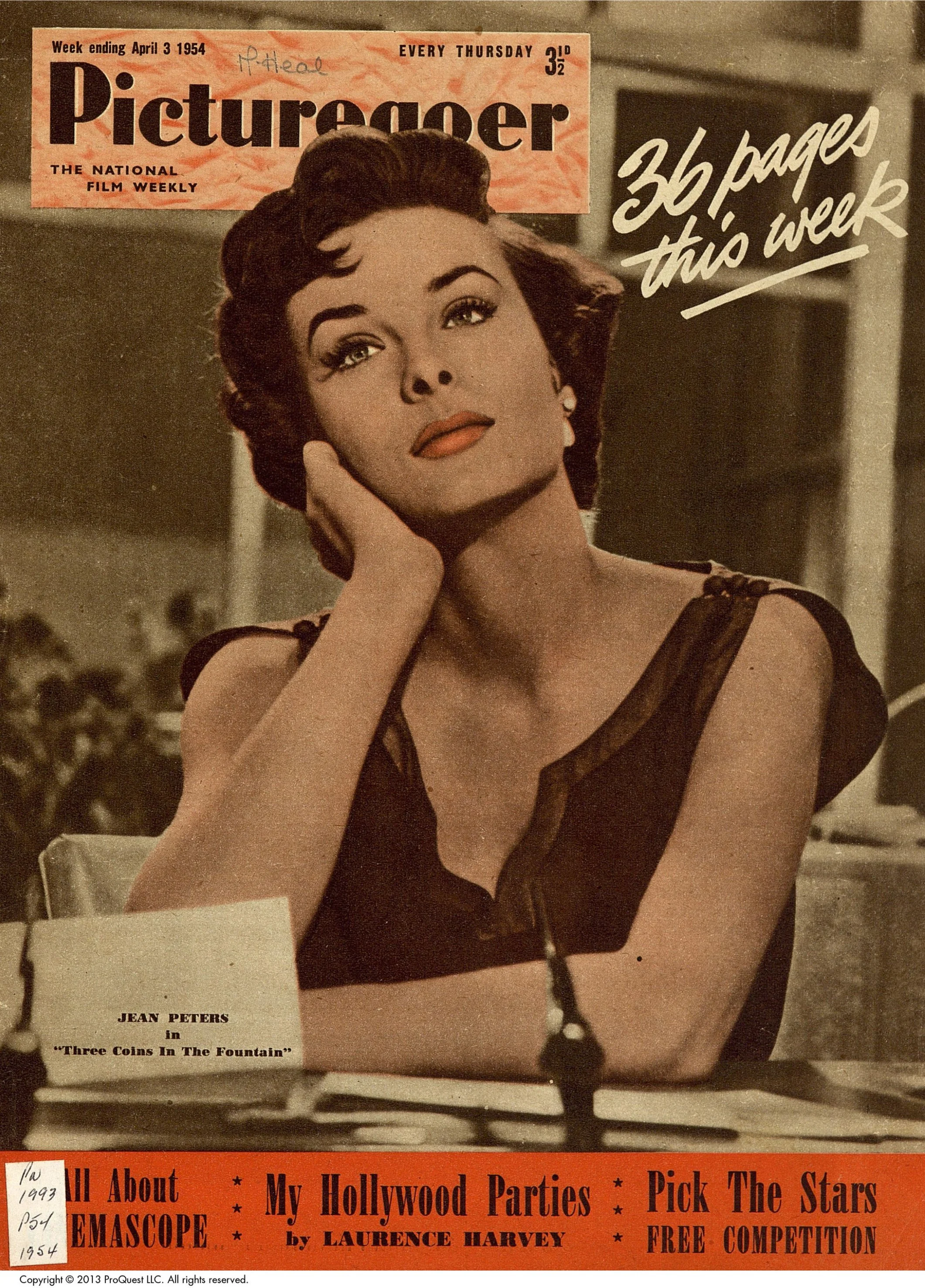
Although the coin toss at the Trevi existed before my father's book, it was a local and relatively obscure custom. What happened in 1954 changed everything. The coin-tossing tradition gained widespread popularity after the film Three Coins in the Fountain, based on Coins in the Fountain, published two years earlier.
In 1957, just three years after the film's release, The New Yorker reported that the normally "unproductive waters" of the Renaissance fountain at the Wadsworth Athenaeum in Hartford had begun yielding a weekly batch of coins — some three hundred dollars' worth. They attributed this bounty to the movie's popularity.
A quiet Roman tradition became a global phenomenon. My father used to say, half-joking and half-serious, that he would gladly have traded the book's royalties for a percentage of every coin ever thrown into a fountain. An estimated 3,000 euros fly into the Trevi each day — approximately 1.25 million euros annually. And that's just one fountain. In the United States, the Bellagio Hotel donates around $12,000 annually from the coins collected from its replica of the Fountain of Trevi.
Since 2001, all the money collected from the Trevi has gone to Caritas Roma, a Catholic charity that supports the city's homeless and operates food banks. The coins people toss in hope and romance end up feeding someone dinner. My father would have liked that.
Working on this project — reissuing my father's book, tracing the extraordinary arc he set in motion — has made me yearn to return to Rome, to stand in the piazza, feel the mist from the cascading water, and toss a coin to ensure I keep returning. I am so grateful for the opportunity to bring this book back into the world.
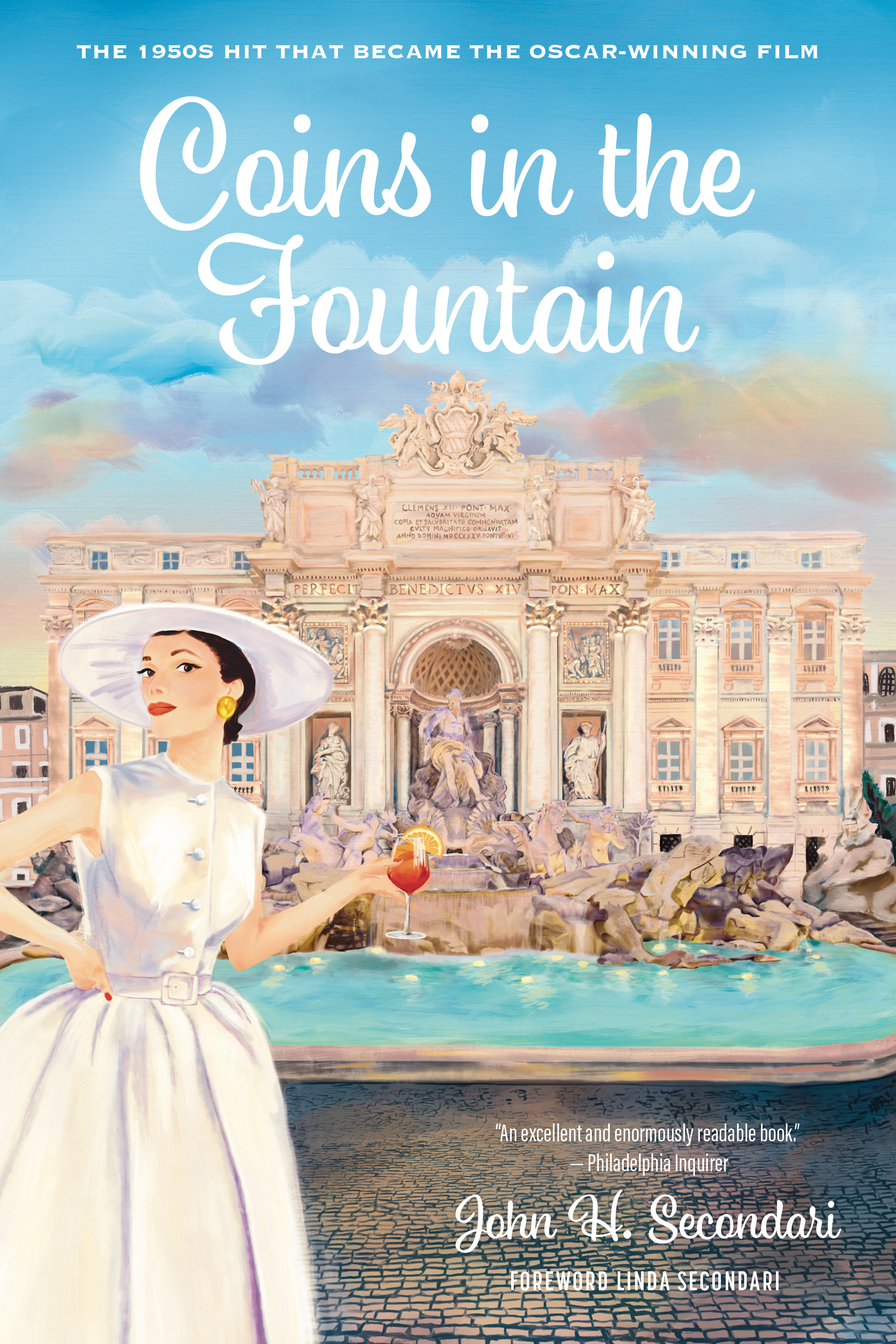
Coins in the Fountain is available for pre-order via Bookshop.org and will be widely available on May 26th!
An excellent and enormously readable book. He writes beautifully and persuasively with page after page of sparkling dialogue.
The Philadelphia Inquirer, November 23, 1952
Entertaining, smart first novel packed with crackling Americanese about Rome, which turns out to be the Paris of post WWII Europe.
Publishers Weekly, October 11, 1952
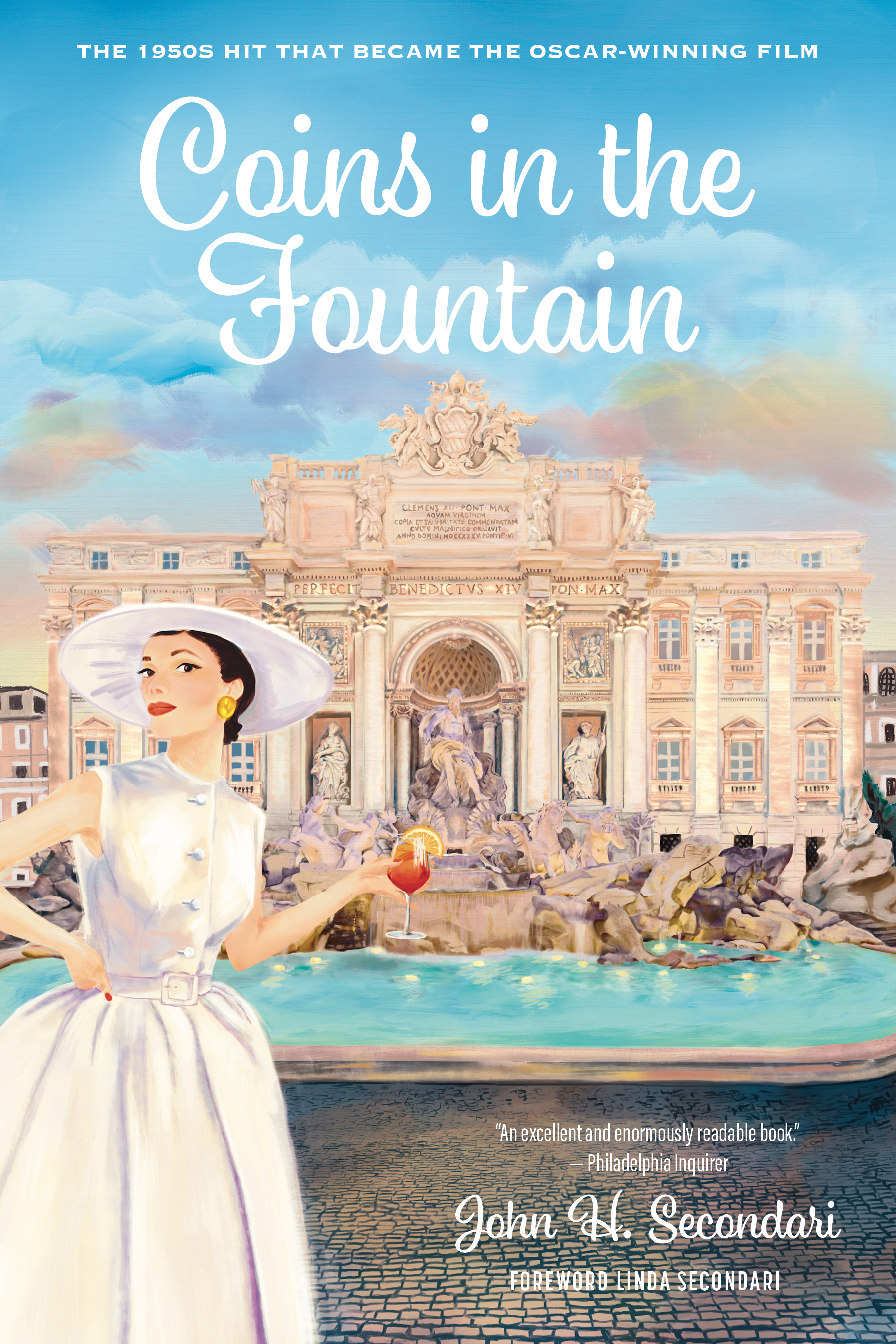
“Coins in the Fountain” will be reissued May 26, 2026! Join the list to get early access, launch updates, and behind-the-scenes extras.
On sale now, everywhere books are sold!
The new edition has extras!
A new foreword by John H. Secondari’s daughter, Linda
Retro Italian cocktail recipes
Cicchetti + Aperitivi (snacks) recipes
to help you get into “la dolce vita” vibe!
368 page Paperback: $24.50. Ebook: $8.99



My Father, the First Lady, and the Baby Who Crashed the White House
One of the greatest gifts resulting from reissuing my father's novel “Coins in the Fountain” has been getting to know him better, coming to understand who John H. Secondari was professionally.
I was nine when he died. What I knew of him was personal and intimate: his great fried eggs and pancakes on a Saturday morning, the bedtime stories he invented on the spot for me (with a great cast of recurring characters), the contentment I felt sitting on his lap as he drank his morning coffee.
I knew, in some abstract way, that he had been well regarded in his field. I have one of his Emmy Awards in my living room to prove it. But evidence and understanding are different things.
My father, John H. Secondari, spent much of the 1960s as a significant documentary producer for ABC. With my mother, Helen Jean Rogers Secondari, he made documentaries about The Golden Age of the Automobile, Leonardo da Vinci, and Pope John XXIII to name but a few (some of their films are at the Paley Center for Media and available for viewing there).
By the late 1960s, he was, by any measure, at the top of his profession. I knew that intellectually. What I didn't know — couldn't know — was what he was actually like in the room. What people thought of him. How he carried himself in the company of the powerful. Then I found First Lady Lady Bird Johnson's diaries.
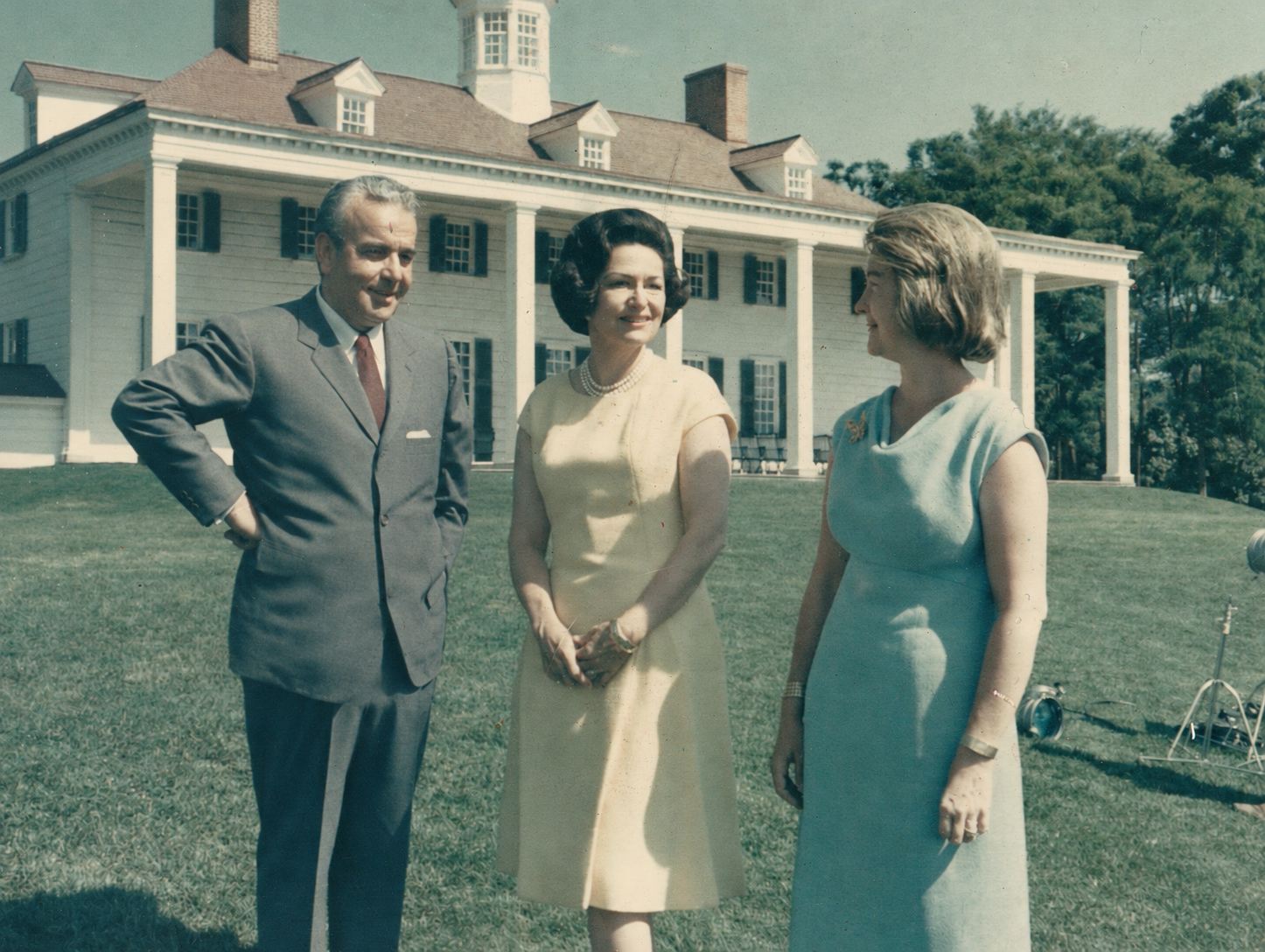
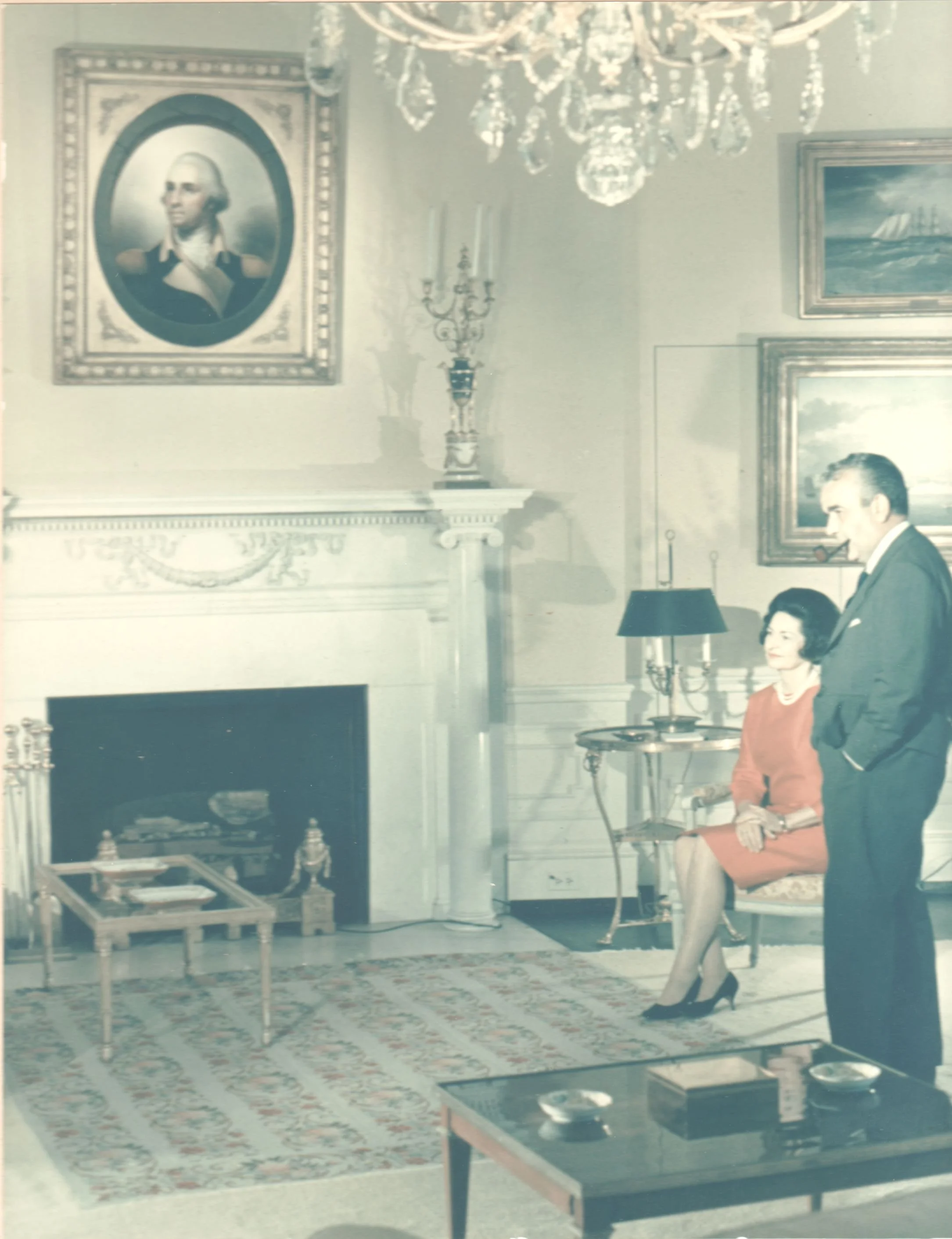
Lady Bird kept meticulous daily diaries throughout her time in the White House, and in 1965, my father appeared in them for the first time. He had been selected by Mrs. Johnson to produce a documentary on her beautification initiative. According to press secretary Liz Carpenter, Lady Bird had reviewed his previous work and decided he was "the man to make this story come to light." The project became “A Visit to Washington with Mrs. Lyndon B. Johnson, On Behalf of a More Beautiful America” and went on to win a Peabody award.
What I found in her diary pages, spanning four years of entries, is a portrait of a man who could navigate the halls of power while still being charmingly true to himself.
There's the filming day at the Treasury Department in May 1965, where a fly landed on Lady Bird's face mid-take, and she kept on with her lines, did not pause until “cut” had been called, at which point my father approached her with a smile and told her that the nicest people he'd ever worked with were Popes and First Ladies.
By November of that year, after my parents had screened the finished documentary at the LBJ Ranch, Lady Bird wrote in her diary that my father and my mother, Helen Jean, were "two of the most delightful people I met in this calendar year." Quite a compliment from Lady Bird Johnson, one of the most discerning women of her era! The relationship continued for years.
Through 1966 and into 1968, my parents appear in her diary not just as professional collaborators but as social companions — invited for cocktails at the Hotel Pierre in New York alongside opera star Robert Merrill. In late 1968, as the Johnson presidency was drawing to a close, my father was part of a small group helping plan documentary films for the LBJ Library. He was there, woven into the legacy, right up until they left the White House.
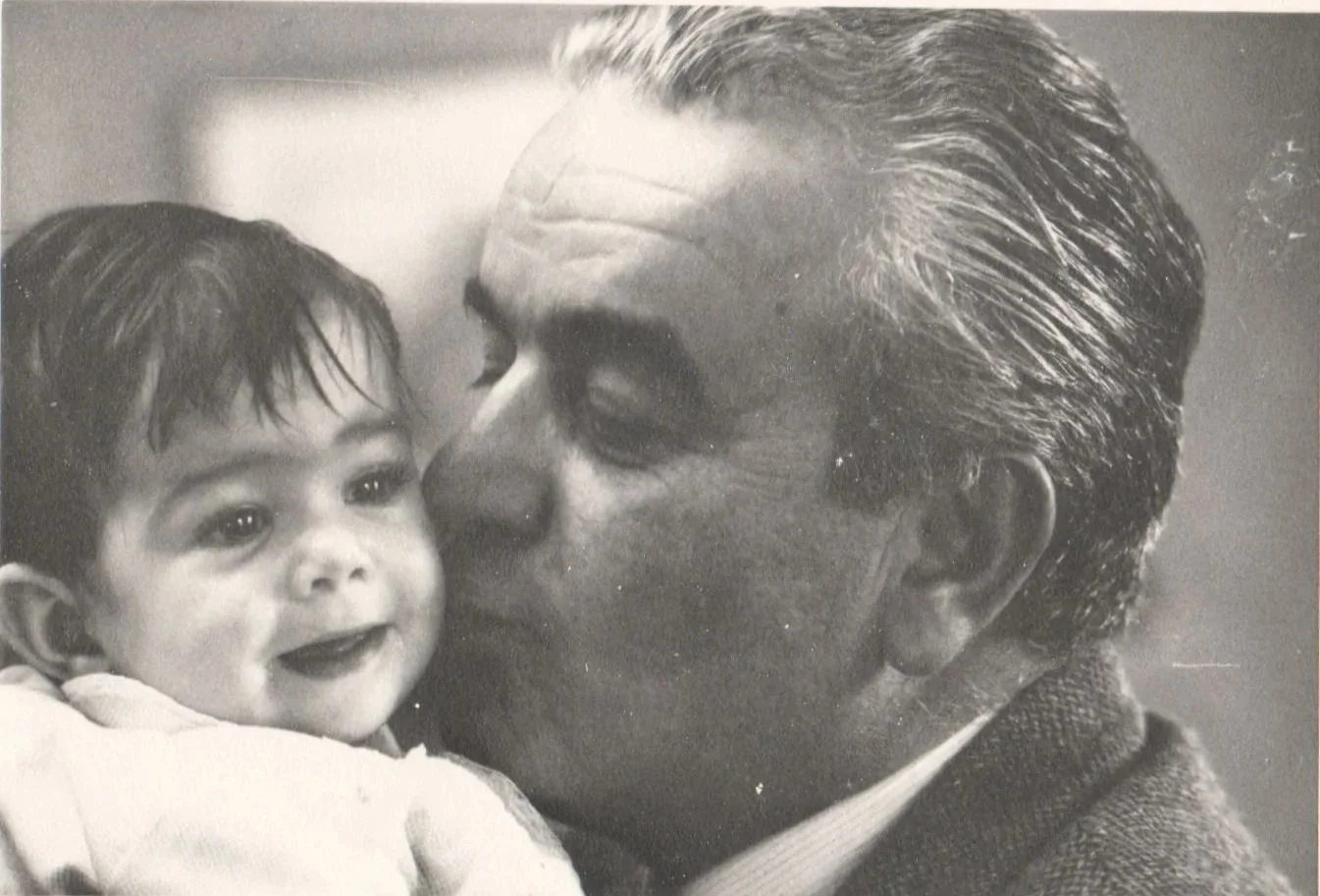
And then there was the entry that brought it all full circle. In a May 1965 diary entry, Lady Bird notes the presence, during a White House filming session, of "John and Helen Jean Secondari, his wife and their two months-old baby." That baby was me! I was at the White House! I was logged in Lady Bird Johnson's diary. I have absolutely no memory of this, for obvious reasons, but somewhere in the National Archives, there is a record of my earliest Washington appearance.
I've spent eight years working to bring my father's novel, “Coins in the Fountain” back into the world, and in doing so, I've been given a great gift, a window into who he was as a person of consequence, as a creative collaborator, as someone who earned the affection of one of the most scrutinized women in America during one of the most turbulent decades in American history. He was a charming and talented man; we were lucky to have him for as long as we did. His personality is evident throughout his work, especially in “Coins in the Fountain.” I am proud to be sharing him with the world again.


Have a Book Club?
This Roman Holiday is Best Shared
If your book club is thinking about featuring “Coins in the Fountain” we’re here to help! We’ve put together a suite of discussion prompts, historical context, and themed ideas to enrich your conversations and gatherings.
The author is a shrewd observer of uprooted Americans ... in this tragi-comedy of manners.
The Booklist, Oct 15, 1952
On sale now, everywhere books are sold!
The new edition has extras!
A new foreword by John H. Secondari’s daughter, Linda
Retro Italian cocktail recipes
Cicchetti + Aperitivi (snacks) recipes
to help you get into “la dolce vita” vibe!
368 page Paperback: $24.50. Ebook: $8.99
Photo Captions
HEADER: La Fontana di Trevi, courtesy of Adobe Stock
TOP IMAGE: Jean Peters in “Three Coins in the Fountain”, “Picturegoer Magazine” 1954
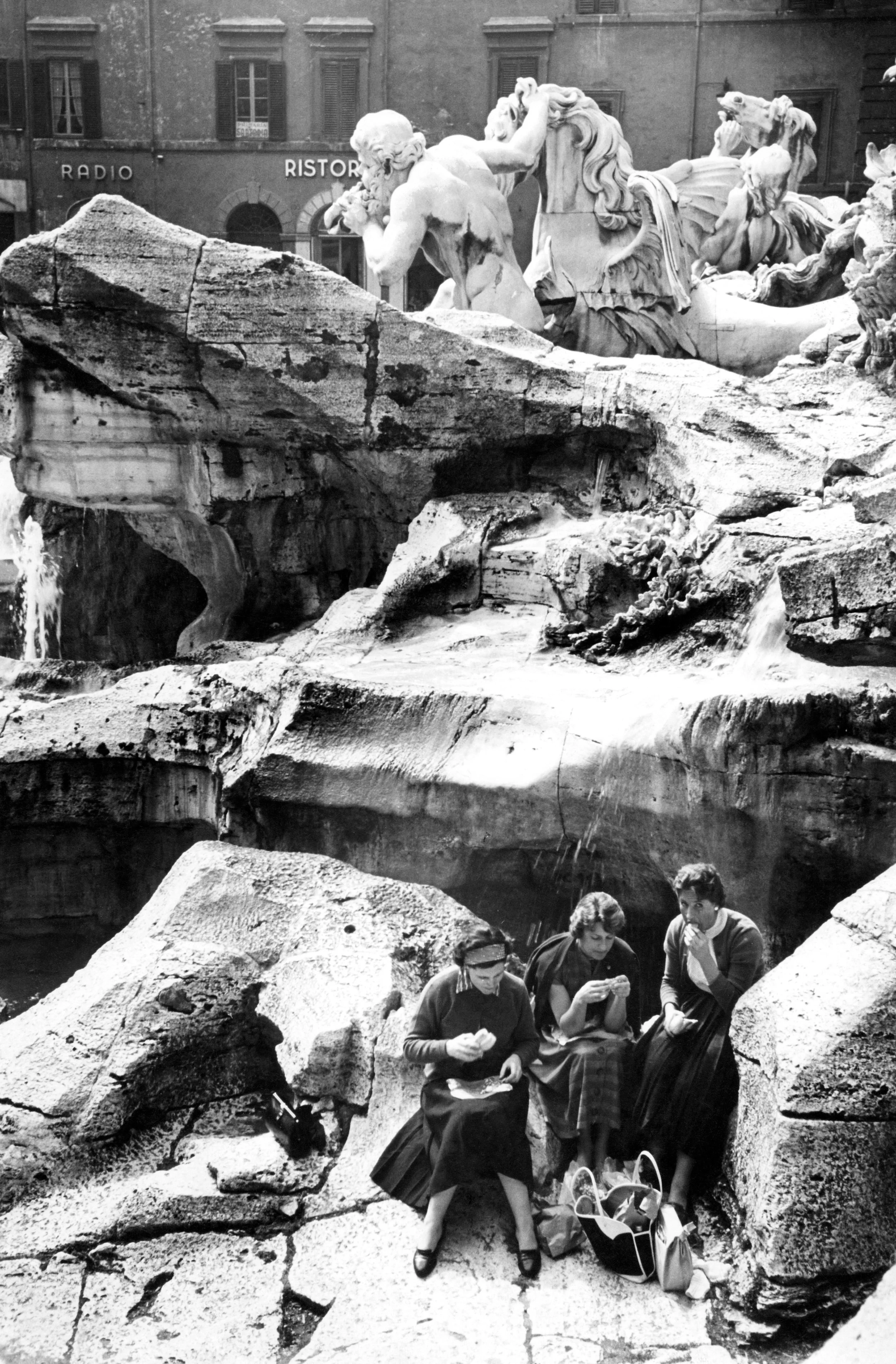
BOTTOM IMAGE: Three women having lunch, within the Fountain of Trevi. Rome, 1956 (Universal Images Group North America LLC / Alamy)