Coins in the Fountain Explained
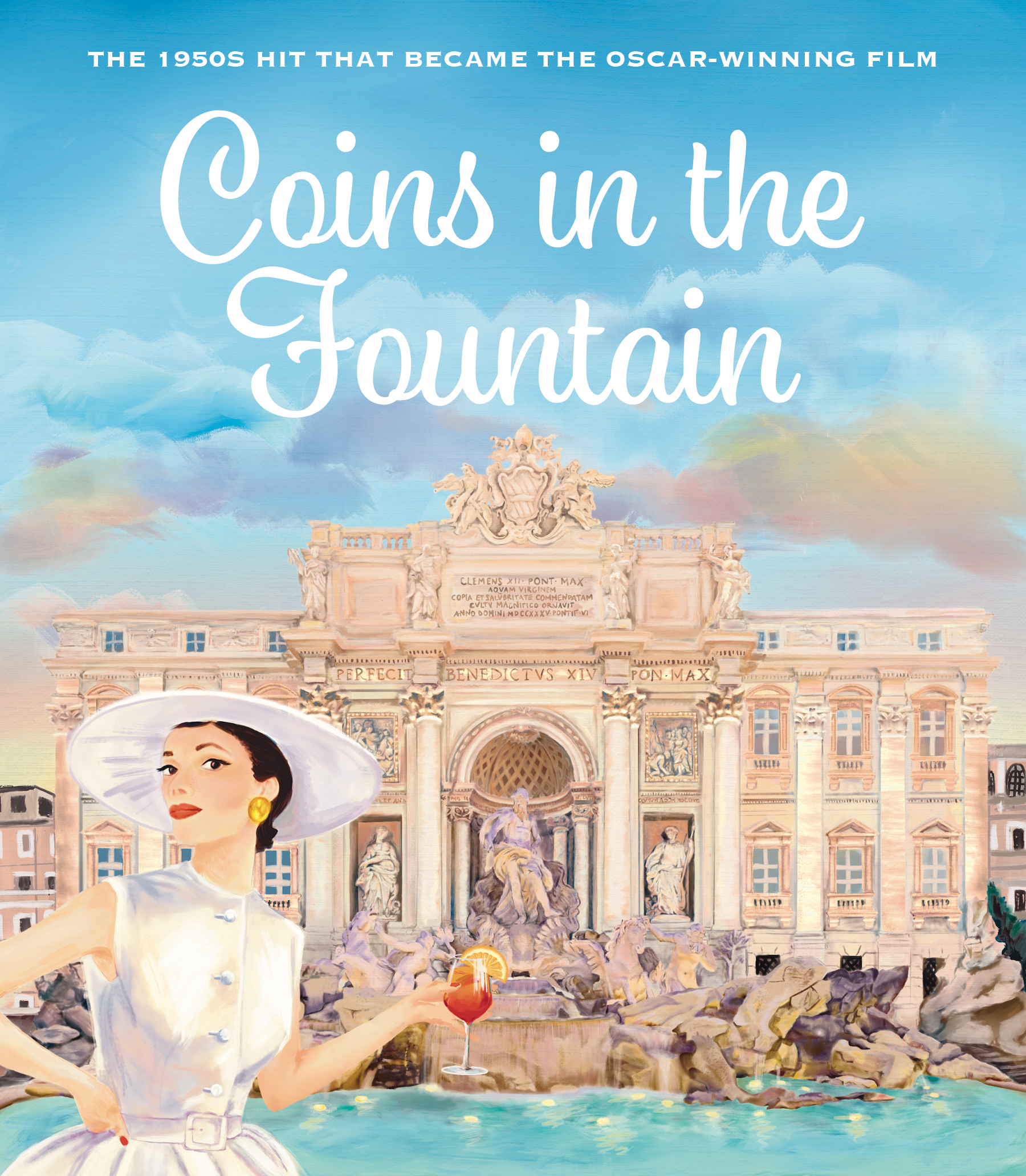
Now, it is common to see coins beneath the water’s surface in fountains everywhere. Airports, museums, parks — take a look, you’ll see them. When I was a little girl, my mother would point to the submerged change and say, "Look at the coins. That's because of Daddy." I didn't fully understand what she meant, but I still felt proud. It wasn't until I was much older that I grasped what my father had actually set in motion: that a novel he wrote in 1952 had taken a quiet Roman ritual and turned it into a most beloved tradition.
Water, Gods, and Ancient Offerings
The impulse to toss something into water is ancient and nearly universal. Long before coins existed, fresh water sources were regarded with deep reverence — springs and wells were lifelines for communities, and in Celtic Europe, they were believed to be inhabited by deities. Offerings, often jewelry or weapons, were placed in these waters to gain the favor of supernatural beings. The wishing well evolved from this.
As for the Trevi Fountain specifically, the introduction of the coin toss is attributed to the German archaeologist Wolfgang Helbig, who lived in Rome between the late 19th and early 20th centuries. Helbig drew inspiration from these ancient customs and embraced coin tossing as a symbolic farewell gesture — a way to express the hope of returning to the city he loved. The tradition at the Trevi, then, was real but modest — a private ritual among educated visitors and the Roman intelligentsia. It was not yet a global phenomenon.
The Fountain at Three Roads
The Trevi itself is older than the coin toss by centuries. Its name derives from the word trivio, meaning "three roads," because it sits where three streets meet — the modern Via Poli, Via dei Crociferi, and Via delle Muratte. But its roots go deeper still: the Aqua Virgo aqueduct, built in 19 B.C. by Marcus Agrippa, still feeds the fountain today. The legend of the coins is: one coin means you will return to Rome; two means you will fall in love with an Italian; and three means you will marry them. The proper ritual requires that you stand with your back to the fountain, extend your right arm, and toss the coin over your left shoulder, aiming for the central basin — and if you're going for all three wishes, each coin must be thrown separately. No shortcuts.
Before the Movie, Before the Song
Although the coin toss at the Trevi existed before my father's book, it was a local and relatively obscure custom. What happened in 1954 changed everything. The coin-tossing tradition gained widespread popularity after the film Three Coins in the Fountain, based on Coins in the Fountain, published two years earlier.
In 1957, just three years after the film's release, The New Yorker reported that the normally "unproductive waters" of the Renaissance fountain at the Wadsworth Athenaeum in Hartford had begun yielding a weekly batch of coins — some three hundred dollars' worth. They attributed this bounty to the movie's popularity.
A quiet Roman tradition became a global phenomenon. My father used to say, half-joking and half-serious, that he would gladly have traded the book's royalties for a percentage of every coin ever thrown into a fountain. An estimated 3,000 euros fly into the Trevi each day — approximately 1.25 million euros annually. And that's just one fountain. In the United States, the Bellagio Hotel donates around $12,000 annually from the coins collected from its replica of the Fountain of Trevi.
Since 2001, all the money collected from the Trevi has gone to Caritas Roma, a Catholic charity that supports the city's homeless and operates food banks. The coins people toss in hope and romance end up feeding someone dinner. My father would have liked that.
Working on this project — reissuing my father's book, tracing the extraordinary arc he set in motion — has made me yearn to return to Rome, to stand in the piazza, feel the mist from the cascading water, and toss a coin to ensure I keep returning. I am so grateful for the opportunity to bring this book back into the world.
Coins in the Fountain is available for pre-order via Bookshop.org and will be widely available on May 26th!
Authors struggle with publishing not because their writing isn't good enough — but because they don't understand how the publishing business works. That's exactly what I help with.