Aldus Manutius & the Paperback
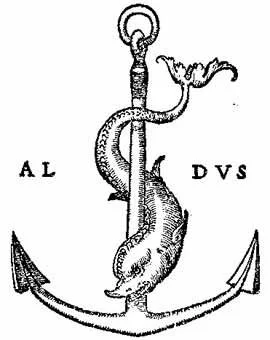
The dolphin and anchor device, symbol of the Aldine Press
Aldus Manutius (c.1450–1515) was the father of modern publishing. Born near Rome, he moved to Venice in the 1490s, where he formed the Aldine Press. The Aldine Press premiered an immensely popular new format well-designed editions of the secular classics Manutius called libelli portatiles, or “portable little books” because they easily fit in the hand of the reader. They were the first paperbacks.
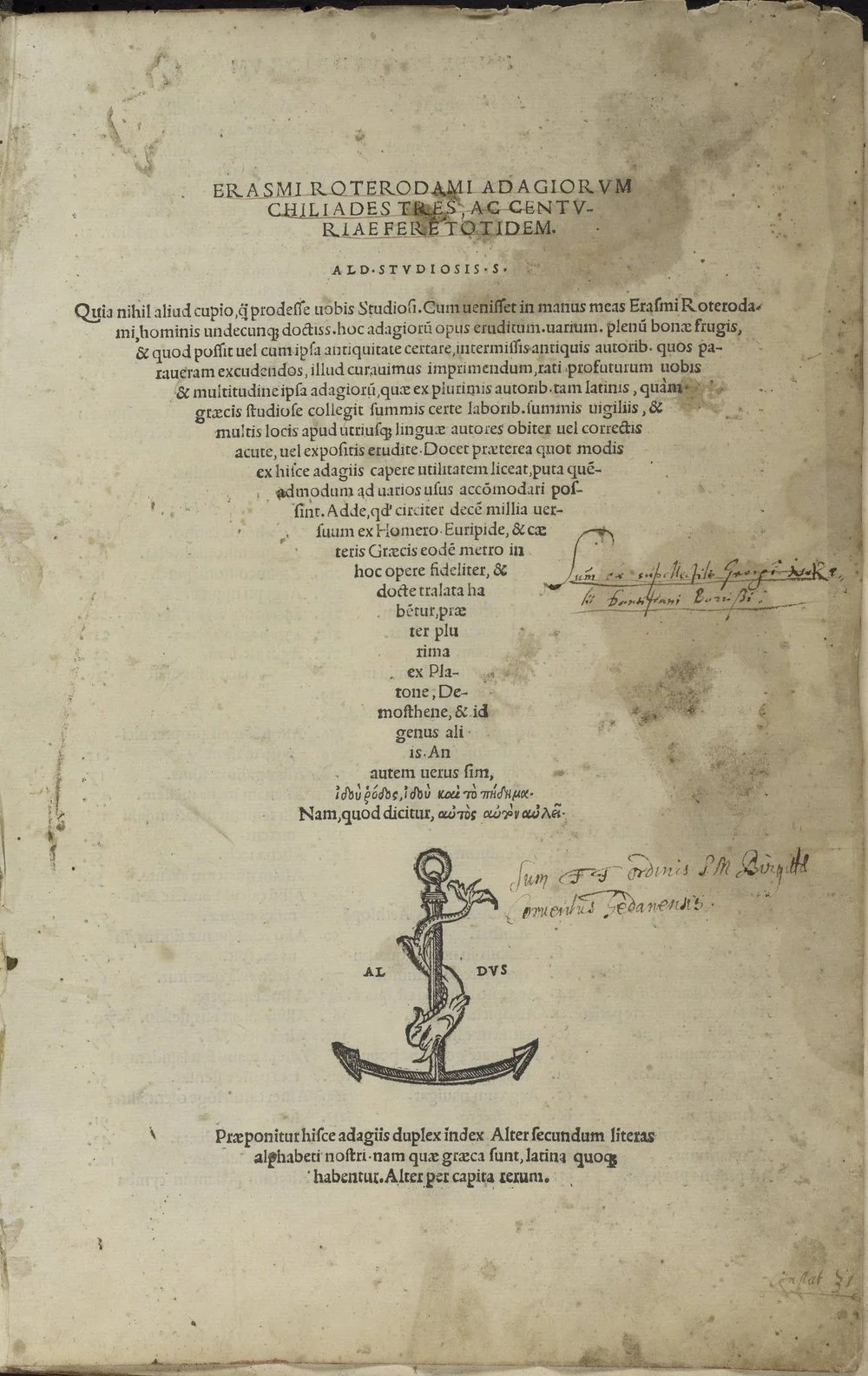
Erasmus, Adagia (1508)
Denarius of Titus, 80 AD (OBV: IMP TITVS CAES Vespasian AVG P M; REV.: TR P IX IMP XV COS VIII P P, Dolphin and Anchor)
Ashmolean Museum, Oxford
The many contributions to the art of printing made by Aldus Manutius include the first italic typeface, which he created with the type cutter Francesco Griffo. Italics were intended to mimic the humanist handwriting of the day. His work in developing the roman typeface devised for a 1496 book by the humanist scholar Pietro Bembo — the inspiration for the modern font Bembo, still treasured by book designers for its grace and readability.
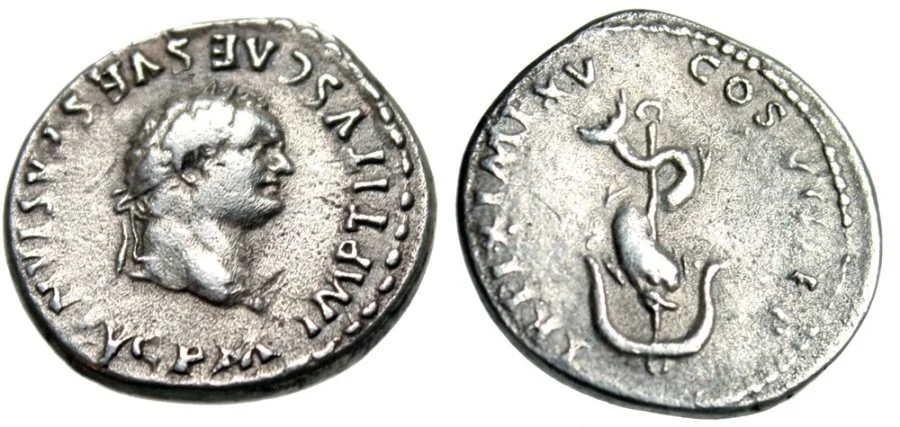
Denarius of Titus
(80 AD)
HCR9525 RIC 26(A)
Ashmosean Museum, Oxford
Although books were popular and in demand Manutius' finances were often unstable. He quarreled with his punchcutter, and he was forced to defend his work from both detractors and admirers. His attempts to secure his innovations against imitators are important moments in the history of copyright. To that end, Aldus Manutius devised a trademark to identify his books in the marketplace. The trademark was based an ancient Roman coin given to him by Pietro Bembo. The symbol of the dolphin and anchor served as the model for this device. The inscription which reads ‘Make haste slowly’ was a favorite saying of Augustus and a slogan of Manutius'.
A coin identical to this one was given to Aldus by Pietro Bembo and served as the model for the dolphin and anchor device. “Make haste slowly” was a favorite saying of Augustus, there was no association in antiquity between the image and the motto. This coin was struck in honor of Neptune — an attempt to appease the god following the eruption of Mount Vesuvius that destroyed Pompeii in 79 AD.